If your door has become hard to lock, the cylinder is only one possible cause.
The problem may be a worn key, a cylinder that is beginning to fail, a deadbolt or latch that is not lining up correctly, or resistance inside the lock mechanism.
One of the first things we check at American Star Locksmith is whether the lock is difficult to operate with the door open, with the door closed, or in both positions.
That simple test often tells us whether the problem is in the
Our locksmith team works with residential and commercial doors throughout New Jersey.
If your door is becoming harder to lock, we can identify whether the problem is in the cylinder, the lock mechanism, or the way the door is closing – and recommend the appropriate repair.
Call American Star Locksmith at (201) 613-2700.
Why Does a Door Become Hard to Lock?
The Key or Cylinder Is Worn
If the key is difficult to turn even when the door is open, the key or cylinder is one of the first things we inspect.
In a conventional pin-tumbler cylinder, the key positions small internal pins so the cylinder can rotate. As the key or internal components wear, that movement may become less smooth.
You may notice that:
- the key needs to be moved slightly before it turns;
- one key works better than another;
- the cylinder feels rough or inconsistent;
- the key has become harder to turn over time;
- or you need more force than you used to.
A worn or poorly cut key can sometimes feel like a bad cylinder. When possible, we test the lock with another properly cut key before deciding that the cylinder itself needs attention.
The Lock Works When the Door Is Open but Not When It Is Closed
This is one of the most useful clues we get from a customer.
We often hear:
“The key turns fine when the door is open, but I have to push the door to lock it.”
When that happens, the cylinder is usually not where we start.
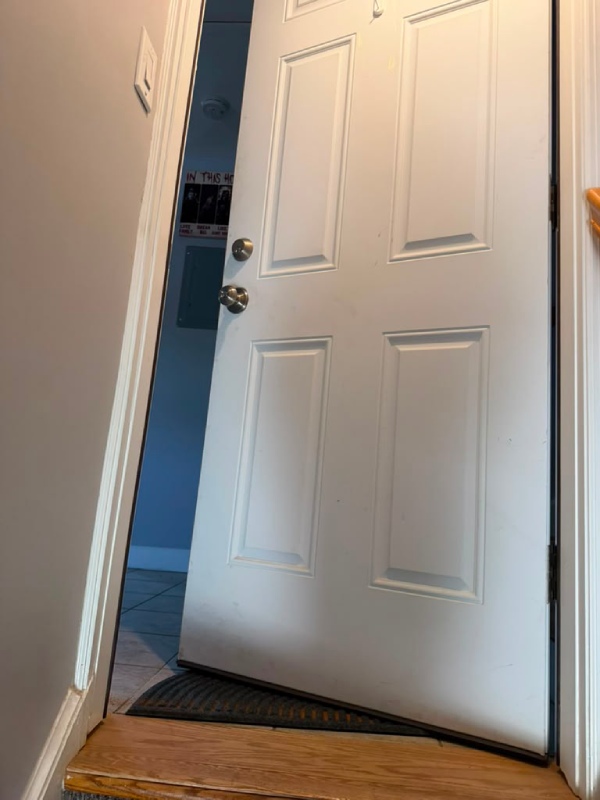
The deadbolt or latch may be meeting the strike plate incorrectly, or the door may have shifted enough to create resistance.
Try This Simple Test
Open the door and operate the lock several times.
If the key turns smoothly and the bolt moves freely, close the door and try again.
If the resistance appears only when the door is closed, the problem is more likely related to the way the bolt or latch meets the frame than to the cylinder itself.
The Deadbolt or Latch Is Not Lining Up Correctly
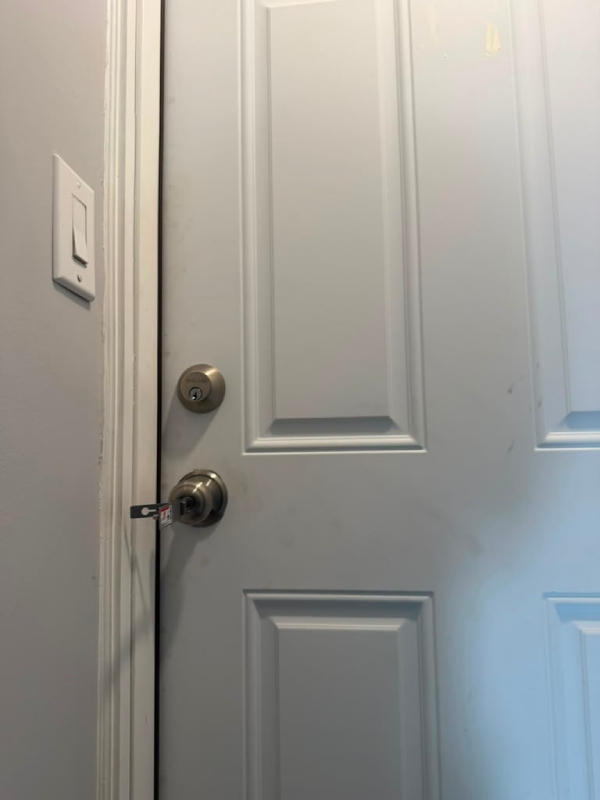
A properly operating deadbolt should enter the strike opening without requiring you to push, pull, or lift the door.
Even a small change in the position of the door can cause the bolt to hit the edge of the strike plate instead of entering cleanly. The same can happen with a latch.
We see this regularly on both residential and commercial doors.
Seasonal changes in temperature and humidity in New Jersey can also make an existing fit problem more noticeable, particularly with wood doors and frames.
If the bolt moves freely with the door open, replacing the cylinder will not correct this type of problem.
The Internal Lock Mechanism Is Wearing Out
Sometimes the cylinder turns, but the resistance is coming from the mechanism behind it.
Depending on the door, the cylinder may operate a deadbolt, latch, mortise lock, or another internal locking mechanism.
Signs of a mechanical problem can include:
- the key starts to turn but becomes difficult partway through;
- the lock feels different from one use to the next;
- the bolt no longer moves smoothly;
- or the key turns but the lock does not respond correctly.
We sometimes find that the cylinder itself is working normally and is simply transferring resistance from the mechanism inside the door.
That is why the way the key feels is useful information, but not enough by itself to identify the failed part.
Multipoint and Smart Locks Can Also Bind Mechanically
Some entry doors use multipoint locks with several locking points, while others use motorized smart deadbolts.
Both can become difficult to operate when the mechanical parts are under pressure.
With a multipoint lock, one hook or bolt may be binding and making the handle or key difficult to move.
With a smart lock, the motor may stop, reverse, or report a jam because the deadbolt is meeting resistance at the frame.
We check the mechanical movement before assuming that a smart lock has an electronic failure. Even an electronic lock still depends on a bolt moving freely.
The Problem Appears During Certain Weather
If a door becomes harder to lock during particularly cold, hot, or humid weather, changes in the fit between the door and frame may be contributing to the problem.
The movement can be small, but enough for a latch or deadbolt that previously had proper clearance to begin rubbing or binding.
This does not mean every seasonal problem comes from the door rather than the lock. But if the problem appears only at certain times of the year, that pattern gives us an important clue.
How Do We Know if the Cylinder Is Actually the Problem?
We become more suspicious of the cylinder itself when:
- the key is difficult to turn with the door open and closed;
- more than one properly cut key has the same problem;
- the cylinder feels rough or inconsistent;
- the key has to be jiggled or repositioned before it turns;
- the cylinder has become loose;
- or the lock has gradually become less reliable.
Depending on the type and condition of the cylinder, it may be possible to service or rekey it. In other cases, replacement is the better solution.
The important point is simple: a hard-to-lock door does not automatically mean you need a new cylinder.
What Should You Do if the Lock Keeps Getting Harder to Turn?
Do not keep increasing the force on the key or handle.
A lock that is becoming harder to operate is often giving you a warning before complete failure. Continuing to force it can lead to a broken key, a damaged cylinder, or a mechanism that eventually fails while the door is locked.
At American Star Locksmith, we first identify whether the resistance is coming from the key, cylinder, locking mechanism, or the way the door is closing.
Sometimes the cylinder needs service or replacement. Sometimes the lock mechanism needs attention. And sometimes the lock itself is working properly, but the bolt is no longer meeting the frame correctly.
If your door has become difficult to lock or your key no longer turns normally, call American Star Locksmith at (201) 613-2700.