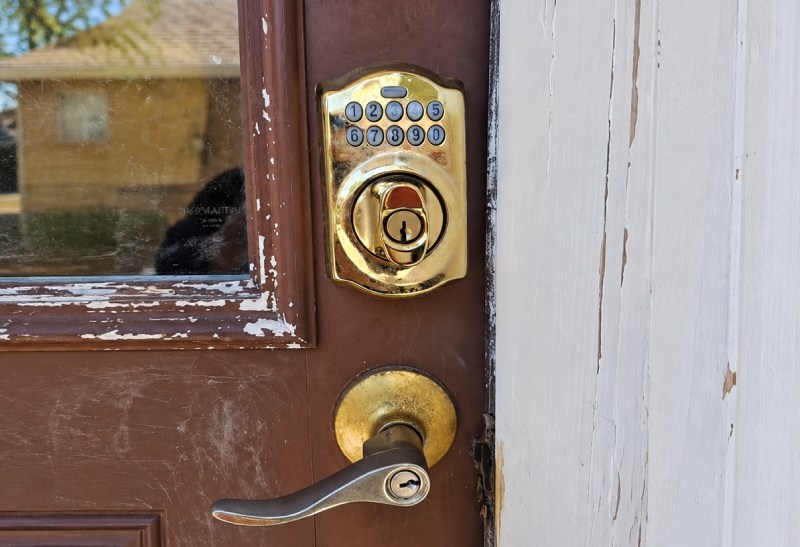
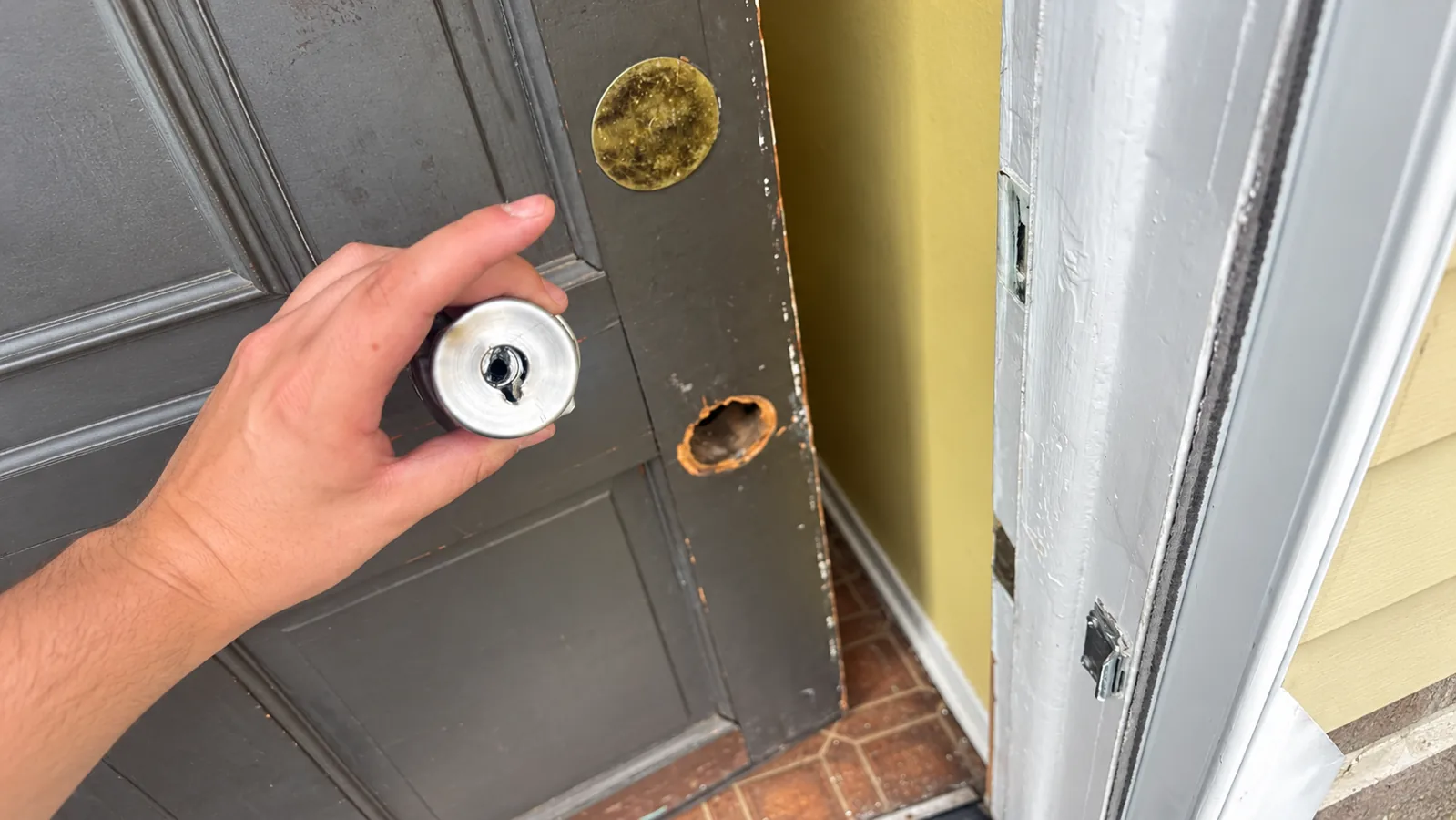
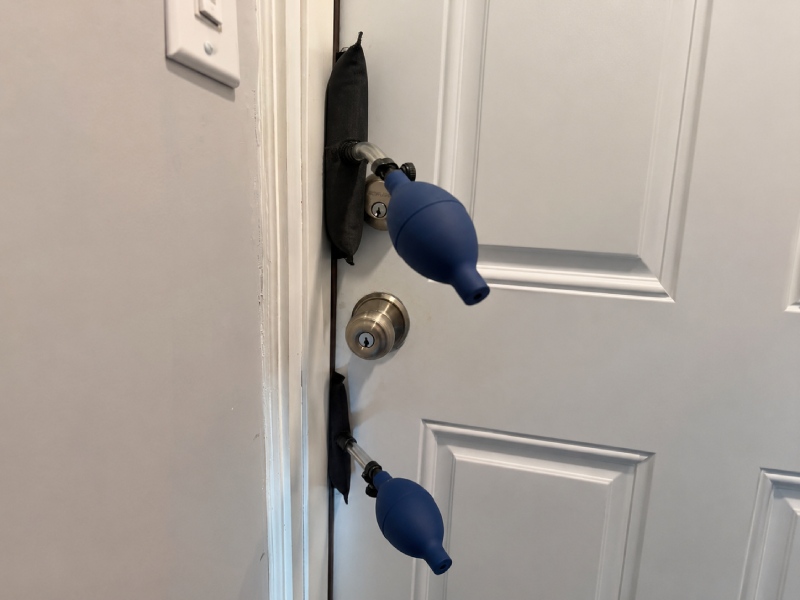
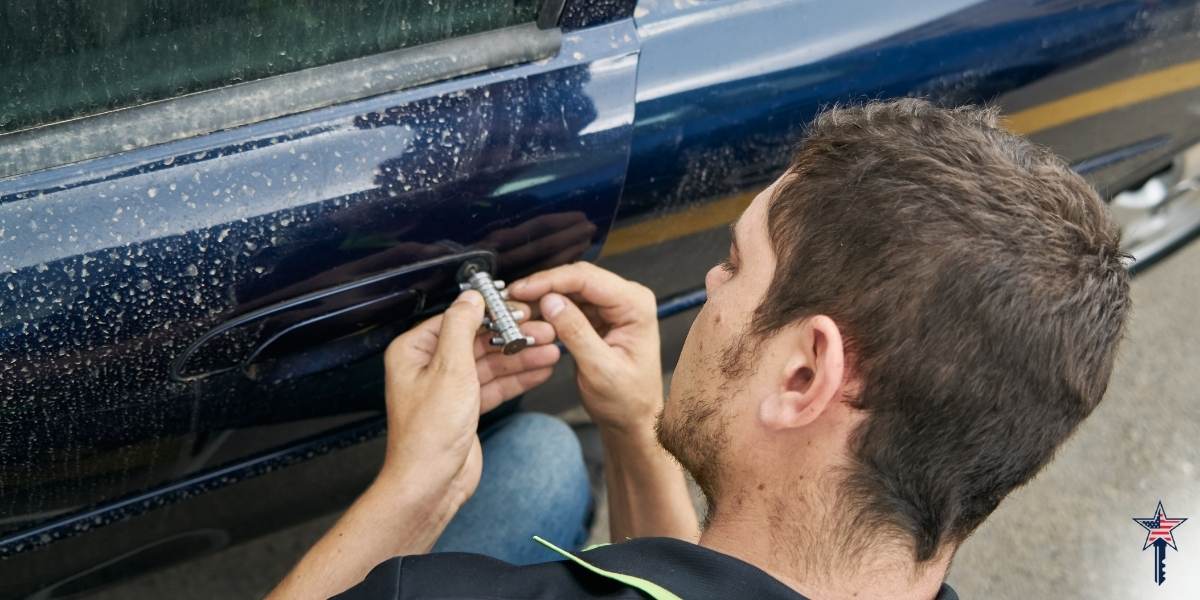
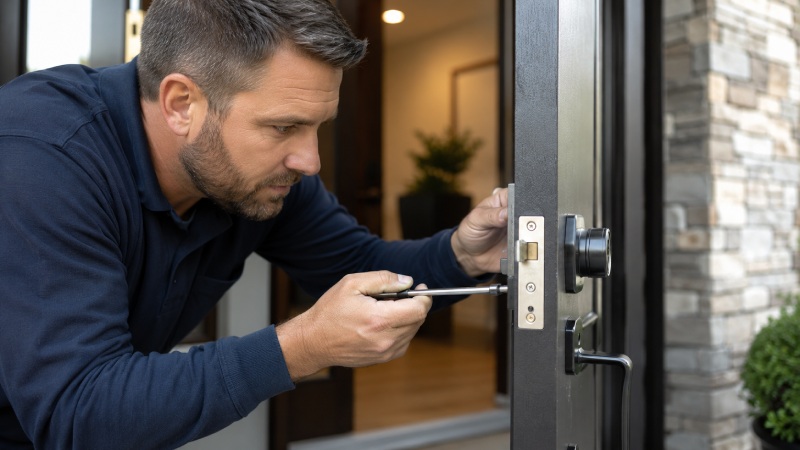
The front door lock problems we see most often include keys that are difficult or impossible to turn, deadbolts or latches that do not engage properly, locks that work only when the door is open, and keys that turn without unlocking the door.
We also deal with broken keys, loose or worn cylinders, multipoint lock problems, and smart locks that fail to complete the locking cycle.
Some problems develop gradually through normal wear, while others can appear after seasonal changes in temperature and humidity or after damage to the door or lock.
One thing we have learned from working on front doors throughout New Jersey is that the part giving you trouble is not always the part that has failed.
A deadbolt that feels stuck, for example, may be working correctly but unable to line up with the opening in the frame.
At American Star Locksmith, we first determine whether the problem is in the key, cylinder, locking mechanism, or the way the lock meets the frame. If you need a locksmith in New Jersey, that diagnosis should come before deciding what needs to be repaired or replaced.
If your front door lock is becoming difficult to operate or has stopped working properly, call American Star Locksmith at (201) 613-2700 for professional locksmith service in New Jersey.
The Front Door Lock Problems We See Most Often
The Key Goes In but Will Not Turn
If the key enters the cylinder normally but refuses to turn, the problem may be the key, the cylinder, the locking mechanism, or pressure on the deadbolt.
A worn or damaged key may no longer position the pins inside a conventional cylinder correctly. Internal cylinder components can also wear over time.
A useful test is to try the lock while the door is open.
If the key turns normally with the door open but becomes difficult when the door is closed, the cylinder may be working properly and the deadbolt may simply be under pressure.
If the key is difficult to turn in both positions, we look more closely at the key, cylinder, and mechanism.
Do not keep forcing a resistant key. A worn key can snap inside the cylinder and turn one problem into two.
The Lock Works When the Door Is Open but Not When It Is Closed
We hear this description frequently from homeowners: “The lock works perfectly when the door is open.”
That immediately changes where we start looking.
If the deadbolt operates smoothly with the door open but binds when the door closes, the problem is usually where the bolt meets the strike plate or frame.
You may find that the lock works only if you push the door inward, pull it toward you, or slightly lift the handle.
New Jersey’s seasonal changes in temperature and humidity can also contribute to movement in wood doors and frames, making a small alignment issue much more noticeable at certain times of the year.
A Quick Test
Open the door and operate the deadbolt several times.
If it moves freely, then close the door and try again. A clear difference between the two positions strongly suggests that the door, bolt, and strike need to be checked before replacing the lock.
The Deadbolt or Locking Bolts Do Not Enter the Frame
A properly fitted deadbolt should enter the strike opening without requiring extra pressure on the door.
If the bolt hits the edge of the strike plate, stops before entering completely, or requires you to move the door into a particular position, the locking points are not meeting correctly.
With a standard deadbolt, there is usually one main locking point.
A multipoint lock may use several hooks, bolts, or rollers along the edge of the door. If one of those points is out of position, the entire system may become difficult to operate.
We often arrive at doors where the customer expects the deadbolt to be replaced, only to find that the deadbolt itself is operating normally and the real issue is where it meets the frame.
The important part is correcting the cause rather than simply making a larger opening for the bolt.
The Handle Will Not Lift or the Multipoint Lock Will Not Engage
Some front doors use a multipoint locking system in which lifting the handle engages several locking points before the key completes the locking process.
If the handle becomes difficult to lift or stops before reaching its normal position, the handle itself may not be the problem.
Possible causes include a locking point binding against the frame, a worn or damaged gearbox, or a failed internal connection.
The gearbox is the central mechanism that transfers movement from the handle and key to the locking points.
For this reason, replacing the visible handle without checking the rest of the system can leave the actual fault untouched.
The Key Turns but the Door Does Not Unlock
A key that turns without unlocking the door points to a different type of failure.
The cylinder may still be rotating, but that movement is no longer being transferred correctly to the locking mechanism.
Depending on the lock, a tailpiece, cam, or similar internal component connects the cylinder to the rest of the mechanism. If that connection breaks or disengages, the key may turn while the bolt stays in place.
Another useful clue is a key that suddenly turns farther or feels much looser than before.
Repeatedly turning the key will not normally restore a broken connection. The failed component needs to be identified.
The Key Breaks Inside the Cylinder
Keys usually break because the key itself is worn, bent, cracked, or because too much force is being applied to a lock that is already difficult to operate.
If part of the key remains inside the cylinder, avoid pushing it deeper into the keyway.
Improvised extraction attempts with screwdrivers, pins, or other tools can make the fragment harder to remove and may damage the cylinder.
Finding Out Why the Key Broke
Removing the broken piece is only part of the repair.
If the lock was already difficult to turn before the key broke, we check the cylinder and mechanism afterward to determine what created that resistance.
If the key alone was damaged, a replacement key may solve the problem. If the lock caused the key to bind, that underlying fault still needs attention.
The Cylinder Is Loose or Spins
A cylinder should remain securely positioned when you insert and turn the key.
If it moves excessively, pulls outward, or spins without operating the lock, there may be a problem with its mounting or with the connection between the cylinder and locking mechanism.
A cylinder that suddenly becomes loose should not be treated as normal wear, especially on a front entrance.
The repair may be simple, but the cause should be checked before the cylinder stops operating altogether.
The Lock Has Been Getting Harder to Use
Many front door locks give warning signs before they fail.
A customer may tell us the key has needed a little extra movement for the last month, the deadbolt sometimes needs two attempts, or the handle has to be held in a particular position.
Those small changes are useful diagnostic clues.
They can indicate gradual cylinder wear, developing resistance inside the mechanism, or an alignment problem that is becoming worse.
A front door lock should not require a special “trick” to operate. If you have gradually changed the way you use the key or handle just to make the lock work, there is probably a reason.
A Smart Lock Tries to Lock but Stops or Reverses
A smart lock can fail electronically, but it still depends on a physical bolt moving freely.
If a motorized deadbolt starts to lock and then stops, reverses direction, displays an error, or begins draining batteries unusually quickly, the mechanical movement should be checked first.
If the bolt is binding against the strike, the motor has to work against that resistance every time the lock operates.
If the bolt moves freely, then attention can turn to the smart lock itself, including the batteries, calibration, motor, or electronic controls.
This is one of the areas where modern lock technology and traditional locksmithing meet: even a sophisticated electronic lock still depends on properly functioning mechanical hardware.
What Should You Do When a Front Door Lock Starts Failing?
The symptoms can tell us a great deal, but the repair depends on identifying the actual failed component.
A lock that works only with the door open points us in a different direction than a key that will not turn at all. A handle that will not lift requires a different inspection from a cylinder that spins freely.
That is how we approach front door problems at American Star Locksmith: identify the fault first, then decide whether the correct solution is an adjustment, repair, rekey, replacement component, or complete lock replacement.
The best time to deal with a lock that is becoming unreliable is while the door can still be opened and secured normally. Once an internal mechanism fails with the door locked, the job can become considerably more complicated.
If your front door lock is becoming difficult to operate or has stopped working properly, call American Star Locksmith at (201) 613-2700 for professional locksmith service in New Jersey.