A jammed door can describe several different problems.
The key may not turn, the latch may remain caught in the strike plate, the deadbolt may stop halfway, or the handle may move without releasing the door.
In other cases, the lock works while the door is open but binds as soon as the door closes.
A door may also become difficult to open because it has sagged, swollen, shifted, or moved out of alignment with the frame.
Even when the lock itself is not defective, professional adjustment may be required if the movement prevents the latch or deadbolt from operating correctly.
Call American Star Locksmith now at (201) 613-2700 for professional mobile locksmith service anywhere in New Jersey.
The first rule when a door is jammed is not to force it!
Excess pressure can turn a manageable problem into a broken key, damaged cylinder, bent latch, or damaged door frame.
Before trying anything, identify what is actually stuck.
Does the key enter fully? Does the handle move normally? Is the deadbolt extended?
Does pushing or pulling the door change the way the lock operates?
Common Reasons a Door Becomes Jammed
The Lock Works With the Door Open but Not When It Is Closed
If you can open the door, test the latch and deadbolt while the door remains open.
When both operate smoothly in that position but bind after the door closes, the lock may still be functional.
The latch or bolt may no longer line up correctly with the strike plate.
A loose hinge, worn weatherstripping, normal settling, or seasonal movement can create enough misalignment to interfere with the lock.
A visibly loose hinge screw can sometimes be tightened carefully.
Stop if the door must be lifted, pulled hard, or pushed firmly before the lock works.
Filing the strike plate or enlarging the bolt opening without finding the cause can weaken the locking point or leave the bolt only partially engaged.
The Key Goes In but Will Not Turn
Confirm that you are using the correct key and that it is inserted fully. If another copy is available, try it gently.
A worn, bent, or poorly duplicated key may enter the cylinder without positioning the internal pins correctly.
Push the door inward slightly, then pull it toward you while applying only normal turning pressure to the key.
If the key works only when the door is moved, the latch or deadbolt is probably binding against the strike plate.
Do not use pliers to create more leverage.
A key that begins to twist is close to breaking.
Avoid pouring cooking oil, heavy grease, or general-purpose household products into the keyway.
When the correct key will not turn even while the door is open, or the cylinder feels rough, loose, or seized, the lock should be inspected by a locksmith.
The Key Is Stuck or Broken Inside the Lock
If the key is stuck but still intact, keep it straight and return it gently to the normal removal position.
At the same time, move the door slightly inward or outward to release pressure from the locking mechanism.
Do not rock the key aggressively or pull it sideways.
Once a key breaks, do not insert another key, screwdriver, pin, or improvised hook into the cylinder.
These attempts can push the fragment deeper or damage the internal components.
Professional extraction tools are designed to remove the broken section while limiting damage to the cylinder.
A new key will not solve a worn or binding lock.
When the door cannot be opened or secured, an on-site mobile locksmith can extract the key, inspect the cylinder, and determine whether the existing lock can be repaired or should be replaced.
The Handle Moves but the Latch Does Not Retract
When a knob or lever turns but the latch remains extended, the failure is usually inside the lockset.
The spindle, retractor, spring, or connection between the handle and latch may be worn or broken.
This is generally not a do-it-yourself repair.
Forcing the handle or inserting tools between the door and frame can bend the latch, damage the trim, or mark the door.
If the latch does not retract when there is no pressure on it, the lockset will usually need to be disassembled, repaired, or replaced.
The Latch or Deadbolt Is Trapped in the Strike Plate
A latch or deadbolt may remain caught because the door is under pressure, the strike plate is out of alignment, or the internal mechanism is failing.
Turn the handle or key gently while first pushing and then pulling the door.
If the bolt releases, the problem still deserves attention because repeated binding usually becomes worse.
A deadbolt that works while the door is open but not while it is closed normally points to an alignment problem.
A deadbolt that will not retract in either position may have internal damage.
Because it is a primary security component, it should not be left operating only partway.
Do not kick the door or pry against the frame.
For a home entrance that cannot be opened without risking damage, a professional residential lockout service is the safer choice.
The Cylinder Spins or Feels Loose
The cylinder should remain stable while the key turns.
If the entire cylinder rotates, moves outward, or shifts noticeably inside the lock, mounting hardware or an internal retaining component may have failed.
Continuing to use it can disconnect the cylinder from the locking mechanism and leave the door impossible to operate.
This is normally a professional repair.
A locksmith may be able to secure the existing hardware, but a worn or damaged cylinder may require replacement.
A Smart Lock or Keypad Is Not Releasing the Door
Replace or recharge the batteries, confirm that the keypad is responding, and use the authorized mechanical key or backup method when one is provided.
If the motor runs but cannot move the deadbolt, the bolt may be under pressure or out of alignment.
Do not repeatedly activate a motor that sounds strained.
If fresh batteries and the approved backup method do not open the door, the lock may require mechanical service, electronic diagnosis, reprogramming, or replacement.
A smart lock still depends on mechanical components to move the latch or deadbolt.
An electronic response from the keypad does not necessarily mean that the locking mechanism itself is working correctly.
The Lock Is Frozen
During cold New Jersey weather, moisture inside or around a lock can freeze and prevent the key from entering or turning.
Use only a lock de-icing product intended for that purpose.
Never use an open flame or pour boiling water over the lock.
Stop if the key begins to bend or the cylinder remains stuck.
Forcing a frozen lock can leave part of the key inside the cylinder and create a more complicated repair.
A Commercial Door Will Not Open or Lock
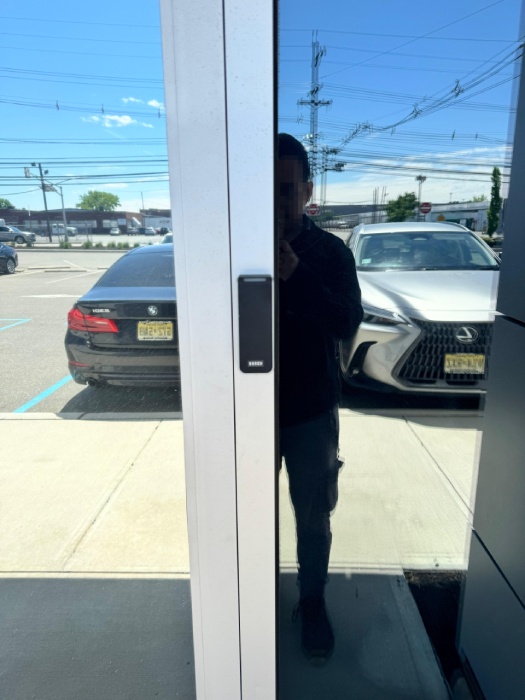
Commercial entrances may use mortise locks, panic bars, electric strikes, door closers, keypads, or access-control systems.
A jam can come from the mechanical lock, a failed panic device, a misaligned electric strike, or an access component that is not releasing.
These systems should not be taken apart by untrained personnel, especially when the door is part of an emergency exit route.
Improper work can affect both building security and safe exit from the property.
A professional commercial locksmith service can inspect the lock, door hardware, panic device, electric strike, and connected access-control components to identify the actual source of the problem.
Not every jammed door begins with a locksmithing failure.
Loose hinges, seasonal swelling, frame movement, worn weatherstripping, or normal building settlement can move the door far enough to interfere with the latch, deadbolt, or strike plate.
A professional locksmith can determine whether the problem can be corrected by adjusting the lock hardware, strike plate, hinges, or door alignment.
If the door or frame has significant structural damage, the locksmith may recommend that a door contractor or carpenter complete the structural repair before the lock is realigned.
When the Problem Requires a Locksmith
A simple check may be reasonable when the issue is clearly a loose screw, a depleted smart-lock battery, or light pressure between the bolt and strike plate.
Professional service is recommended when:
- The key is bending, trapped, or broken.
- The cylinder spins or moves inside the lock.
- The handle does not retract the latch.
- The deadbolt will not extend or retract.
- The lock works only when the door is lifted or pushed hard.
- The door cannot be opened or locked securely.
- A panic bar, electric strike, or access-control lock is not operating correctly.
The situation is urgent when someone cannot enter or leave, an exterior door must remain open because the lock has failed, a business cannot secure its entrance, or a commercial exit device is not working correctly.
In those cases, an emergency locksmith service can open the door, diagnose the failure, and restore a secure locking function.
A jammed door is a mechanical problem, not something to overcome with more force.
Resistance inside the key, cylinder, latch, or deadbolt is a warning to stop.
A professional locksmith can identify the failed component and complete the repair without creating unnecessary damage to the lock, door, or frame.
Call American Star Locksmith now at (201) 613-2700 for professional mobile locksmith service anywhere in New Jersey.